Hbf Reinvents The Conference Table With The Torre Collection

HBF reinvents the conference table with the Torre collection

0

HBF is disrupting the traditional conference setting with its brand new range of Torre conference tables. Designed by HBF’s in-house Artis studio and launched at NeoCon this month, Torre is an expertly crafted solid wood table that is both beautiful and functional, while meeting the demands of today’s modern technology. The remarkable feature of Torre is its sleek, tapered base which can incorporate power and hide the look of wires and cords.

Torre’s shape is inspired by a simple cake tray: a curved tray with a column underneath that gently tapers towards the center and widens towards the base. Its strength is weighted at the base, but the table itself comes across as light, almost floating, thanks to the elevation of its wooden top from the support columns.

“Commercial design presents an increasingly blurred line between casual and formal, living and working,” commented HBF President Dan Chong. “Torre fulfills that need. It looks at home in any stunning residential setting, but it has the durability and function of a motorized element for offices or other public spaces.”

Torre adapts to the needs of modern workplaces without sacrificing style. By integrating power through Torre’s tapered base to the floor, the table remains a seamless aesthetic expression, uninterrupted by visible cords and connectors. Its clean appearance makes it particularly flexible in the workplace as well as outdoors, in hospitality establishments, cafes and beyond … any modern setting seeking to incorporate power into avant-garde design . The outlets in the table top are centered for round tables or right, right and left, or right and left and center for flexible rectangular tops. This flexible power placement provides additional functionality, channeling power to multiple users on the table depending on the configuration.

Its design language sets it apart from conference tables commonly found in the commercial environment. Constructed with a solid ash top, Torre’s unique design features a modern aesthetic with durable materials that will last for years. The solid ash top has a rounded edge, while the striking tapered base is either ash veneer or solid surface veneer (Corian).

Source link

Share.

Leave A Reply Cancel Reply

Dupont Unveils Smart Conference Table

DuPont unveils smart conference table

0

We believe products like our Smart Conference Table are the future of collaboration and we are excited to provide solutions for this space, as well as others related to smart buildings and the Internet of Things (IoT).

DuPont Electronics & Imaging today announced the launch of a one-of-a-kind intelligent conference table, a complete communications solution for collaborative spaces. Inspired by ideas from manufacturing, technology and design, the table adds style, reduces clutter and improves collaboration. DuPont will showcase the table and other innovations from its Smart Materials segment at InfoComm in Orlando, Fla., June 12-14, booth # 4088.

“DuPont is excited to share this product after months of extensive research and testing,” said Brian Ammons, Commercial Director, Smart Materials. “We believe products like our Smart Conference Table are the future of collaboration and we are excited to provide solutions for this space, as well as others related to smart buildings and the Internet of Things (IoT). . “

The smart conference table combines DuPont’s experience in technology and design, providing a complete collaboration solution with seamless conferencing and phone calls, as well as easy-to-use controls to adjust the room environment. room, including lighting, blinds and audio levels. .

The table can include any combination of the following built-in design features:

  • Wireless control system integrated into the touchpad
  • Integrated LED lighting display for personalized branding
  • Smart room controls for lighting, shade and volume
  • Retractable HDMI, USB and power cables
  • Qi wireless charging for smartphones
  • Individual MEMS audio jacks for superior call clarity
  • Inductive speakers for high sound quality

In addition, the Corian® Solid Surface material is durable and can withstand the wear and tear of regular use. The modular table design makes redesigning the collaboration space a straightforward process, with no equipment or tools beyond the table to manage.

The Smart Materials segment connects DuPont’s strengths in the building and construction markets as well as in the electronics space to develop new products focused on providing complete IoT solutions for the Smart Building space. By integrating various electronic functionalities directly into building materials, DuPont is creating a new class of connected products. For more information, please visit electronics.dupont.com.

About DuPont Electronics & Imaging

DuPont Electronics & Imaging is a global supplier of materials and technologies serving the semiconductor, advanced chip packaging, circuit boards, electronic and industrial finishing, display and printing industries. digital and flexographic. From cutting-edge technology centers around the world, talented teams of researchers and application experts work closely with customers, providing solutions, products and technical services to enable next-generation technologies. You can find more information about DuPont Electronics & Imaging on our electronic solutions and advanced printing websites.

About DuPont

DuPont (NYSE: DD) is a global leader in innovation with materials, ingredients and technology solutions that help transform industries and everyday life. Our employees apply diverse science and expertise to help clients advance their best ideas and deliver essential innovations in key markets including electronics, transportation, construction, water, health and well -being, food and worker safety. You can find more information at http://www.dupont.com.

DuPont ™, the DuPont oval logo, and all products, unless otherwise noted, designated with ™, ℠ or ® are trademarks, service marks, or registered trademarks of affiliates of DuPont de Nemours, Inc.

Share the article on social media or by email:

Source link

Share.

Leave A Reply Cancel Reply

From The Dinner Table To The Conference Table

From the dinner table to the conference table

0

SPONSORED CONTENT

AWorldwide, there are an estimated 125 million family businesses – but no one really knows for sure. Grand Valley State University’s Family Owned Business Institute reports that the United States is home to 5.5 million family businesses, employing over 98 million people!

Download a free PDF of this article.

Often times, becoming a family business is something that evolves rather than expected. The founding generation of entrepreneurs build a business on vision, hard work and sacrifice. By executing the vision and creating success, family members are drawn to the business.

From the guest table to the conference table: practical tools for the governance of family businesses ”

FREE DOWNLOAD

But when two or more generations work together, a whole new dynamic enters the business. Running a business is hard enough. How do family complexities impact business operations?

Statistics on survival rates are not friends of the family business. In fact, most businesses fail in the second or third generation. Good planning is essential for survival.

Here’s what family businesses need to consider and implement in order to increase those survival rates.

Create a succession plan

Writing a succession plan and a buy-sell agreement should be one of the first steps for the first generation as you prepare to pass the business on to the next generation. Having agreed structures, payment schedules, and other crucial decisions documented helps eliminate the potential for family troubles. Be clear in communicating these decisions with all family members who would be affected.

Establish a family governance structure

Family governance is a process or structure aimed at educating and facilitating communication among family members. The three-circle model of the family business system was developed at Harvard Business School in 1982 and continues to be the organizational framework for understanding family business systems. The three components are: family, property and business. Often, each of these components will have its own governance.

Do not create two categories of employees: family and non-family

And don’t put your family members on the payroll unless they’re active contributors. It is important that family and non-family employees are treated equally. Everyone should have performance reviews, be subject to the same employee and administrative policies, and have clearly defined roles within the organization. All employees should follow the same merit system, and that goes for disciplines and awards.

Model the importance of good communication

Making effective communication a priority with all employees is crucial. Ongoing two-way communication opportunities create a family culture for everyone involved. A perception that family members may have more inside information could be detrimental to the rest of the team.

Understand that not all family members are made to be in the company

You wouldn’t hire someone without conducting an interview or verifying appropriate work experience. The same is true of offering a position within the company just because someone is a family member. Success will come when everyone is on the same page in terms of business orientation. You need people with the skills and the passion to make your business successful. Be open and honest about who is – and isn’t – the right fit for your business.

Separate the conference table from the dining table

Everyone aspires to a healthy work-life balance. But how do you separate work and life when it comes to the same group of people? Set limits. Switch off your phone. Be intentional about the times of day you talk about the business. Resist the urge to turn every family reunion into a reunion. Modeling this top-down behavior will give everyone the time they need to be a family, not co-workers.

Next steps:

Family businesses are multiplying. Now is the time to work to help them thrive. For more information, download a free e-book “From the Dinner Table to the Conference Table: Practical Tools for Family Business Governance” and get in-depth information on the topics covered in this article.

Source link

Share.

Leave A Reply Cancel Reply

Does The Air In The Conference Room Make You Dumber

Does the air in the conference room make you dumber?

0

You are locked up with coworkers in a boardroom for two hours, making a plan. Risks are weighed, decisions are made. Then, as you emerge, you realize that it was much, much hotter and stuffy in there than in the rest of the office.

Small rooms can build up heat and carbon dioxide from our breath, along with other substances, to a point that you might be surprised by. And in this case, a small body of evidence suggests that when it comes to making decisions, indoor air may matter more than we thought.

At least eight studies over the past seven years have looked at what specifically happens in a room that accumulates carbon dioxide, a main ingredient in our exhalations. While the results are inconsistent, they are also intriguing.

They suggest that while the types of air pollution known to cause cancer and asthma remain much more urgent as public health concerns, there may also be pollutants whose most damaging effects are on the body. mind rather than body.

So, can you trust the decisions made in small rooms? How does indoor air quality affect your cognitive abilities? And as our knowledge of the effects of indoor air increases, do we need to rethink the way we design and use our buildings?

[Like the Science Times page on Facebook. | Sign up for the Science Times newsletter.]

In the United States, buildings have become increasingly airtight over the past 50 years, resulting in reduced energy consumption for heating and cooling. It also facilitated the build-up of gases and other substances released by humans and our property inside.

Although indoor air quality is not as well monitored as outdoor air, scientists and ventilation professionals have widely monitored carbon dioxide inside.

Higher CO2 levels – say, greater than 1,200 parts per million (ppm) – often indicate poor ventilation. Worrying substances emitted by new furniture, office supplies and rugs could build up in the air.

“This has long been considered an indicator of the quality of the air in a space,” said Brent Stephens, professor of architectural engineering at the Illinois Institute of Technology.

While other indoor air pollutants can be linked to respiratory problems and cancer, carbon dioxide itself is generally considered harmless at these levels. But researchers have started to reexamine this hypothesis.

Biomedical researchers have found that inhaling carbon dioxide at levels much higher than one might imagine in a workplace dilates blood vessels in the brain, reduces neural activity, and decreases communication between people. regions of the brain.

But how much smaller amounts, like those commonly found inside, could affect the brain has not been much studied.

About ten years ago, William Fisk, a mechanical engineer at Lawrence Berkeley National Laboratory, and his colleagues placed people in rooms where carbon dioxide levels varied.

They exposed subjects for hours to concentrations as low as 600 ppm, low enough for indoors and as high as 2,500 ppm – a high but not astronomical amount that is probably not uncommon in crowded spaces. Carbon dioxide levels in some classrooms can be twice as high, Fisk noted. in a later article.

The scientists took their subjects a problem-solving test measuring productivity and decision-making skills in the real world, said Usha Satish, professor of psychiatry at SUNY Upstate Medical University and co-author of the research.

The test generates scores for large attributes as the basic strategy and initiative. The team found a strong relationship between seven of the nine rubrics they looked at and carbon dioxide levels.

The higher the carbon dioxide, the worse the people tested; at 2,500 ppm, their scores were generally much worse than 1,000 ppm.

“It’s a very, very well designed study, with control for everything,” said Pawel Wargocki, professor of civil engineering at the Technical University of Denmark. “They were very, very careful with the details of the design.”

Other scientists who read the study were interested in the subject. A team led by Harvard researchers published similar results in 2016.

They had office workers come to a fictitious workplace for six days and take the same type of problem-solving test while being exposed to various concentrations of carbon dioxide and volatile organic compounds commonly found in apartment buildings. offices.

As carbon dioxide levels fell from 550 ppm to 945 ppm to 1400 ppm, subjects’ scores under most headings dropped significantly. (Problem-solving ability also seemed to suffer as VOC levels increased.)

“What we saw were these striking and really quite dramatic impacts on decision-making performance, when all we did was make some minor adjustments to the air quality in the building,” said Joseph Allen, a professor at the Harvard TH Chan School of Public Health who led the study.

“It is important to note that this was not a study of unique and exotic conditions,” he added. “It was a study of the conditions that could be achieved in most, if not all, buildings.”

Not all studies aimed at verifying the relationship between indoor carbon dioxide and cognition find a clear effect. Several studies using simpler tests of cognitive ability, such as proofreading a text, have not shown such a change.

Two studies using the same more complex test on submarine crews and people believed to be representative of NASA’s astronaut corps also did not reveal a link, Dr Wargocki said.

This does not mean that the studies that documented an effect were wrong. It might be easier to compensate for mental blurring on the simpler tests.

Or there may be an interaction between the stress of taking the more complex test – which takes the form of a simulation in which subjects have to use judgment and move quickly – and higher carbon dioxide levels that result in lower scores.

So far, studies haven’t measured subjects’ stress levels or taken other readings that might help explain why carbon dioxide only sometimes affects cognition. Submarine crews and astronauts are trained to make decisions under stress and can function normally under conditions that would disturb others.

The question really is, what causes this effect and under what circumstances Dr Wargocki appears.

The fact that some people have difficulty thinking while breathing moderate levels of carbon dioxide suggests that it may be useful to take a closer look at the levels in offices and schools.

“In a study we did in a classroom, we consistently found high levels of CO2 over 1000 ppm over the course of an hour,” said Shelly Miller, professor of environmental engineering at the University of Colorado Boulder.

Numerous studies have also shown that increasing the ventilation rate in schools can increase children’s test scores and task speed, and reduce absences.

What the researchers found in the classrooms might be instructive for small conference rooms at work where we exchange ideas and plans. None of these studies specifically examined such spaces.

But variations in performance at different ventilation levels suggest that a generally recommended minimum airflow for a conference room, which is 6 cubic feet per minute per person, may not be optimal, Dr Allen said.

Without a specialized sensor, you can’t realistically know how much carbon dioxide is building up as you settle into a small room for a long meeting. It may generally be advisable to open a door (or a window when possible, and when outdoor air pollution is not a major concern). Letting in some fresh air can even help get some good ideas flowing throughout your meeting and keep the discussion from getting too stale.

Source link

Share.

Comments are closed.

Futuristic Furniture Design The Rex Axon 3d Printed Conference Table 3dprint Com

Futuristic furniture design: the Rex Axon 3D printed conference table – 3DPrint.com

0

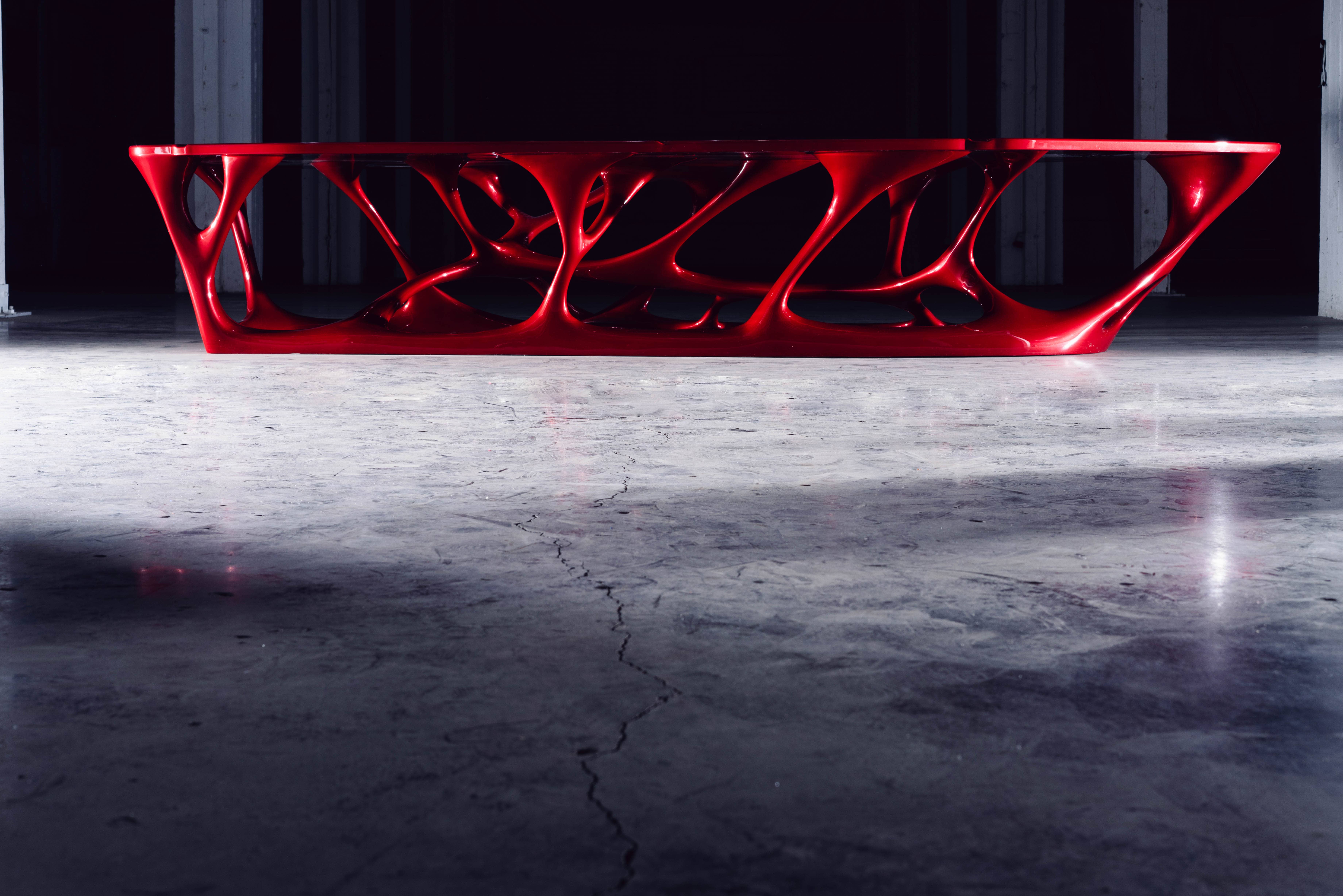
The Rex Axon conference table 3D printed with a colorful Ferrari Rosso finish

Can your office be upgraded? When it comes to luxury furniture design, Rex Axon might just be the next coveted item on the CEO list. It claims to be the world’s first 3D printed conference table. It will definitely turn everyone’s head to see the curvaceous structure, a design inspired by neural networks. It is the first table of its kind and designed and produced by Polish companies Wolf and Patech. 3D printing in furniture design has been around for a few years and beyond some of the beautiful concepts created, the technology has some advantages for the industry, such as lower initial and inventory costs, faster implementation of unique changes and designs.

With a length of four meters and a width of over one meter, the furniture with a futuristic design was entirely printed in one piece. With handcrafted finishes and painted in the Ferrari Rosso color, this unique bionic creation is not only appealing to the eye, but at 260 kilos, the table withstands 2.6 tons of pressure, which means that it can even support the weight of a car. This is usually one of the big concerns for furniture designed with 3D technology, especially for everyday pieces like chairs and tables, where the designs are pretty to look at but their durability still needs to be improved.

The Rex Axon has been printed with Fused Deposition Modeling (FDM) technology and is made from PET material – which is commonly used in the construction industry and for packaging water bottles. FDM is great for build strong, durable and dimensionally stable parts with the best precision. Other researchers have recently used it in their work, such as the famous racing family Andretti Autosport, a dpromote Stratasys FDM 3D printing technology to accelerate the design and development of their cars; in South Korea, researchers at Seoul National University use FDM to explore the limits of fashion creation, and partners of a health institute in Spain use Stratasys FDM machines to 3D print medical models.

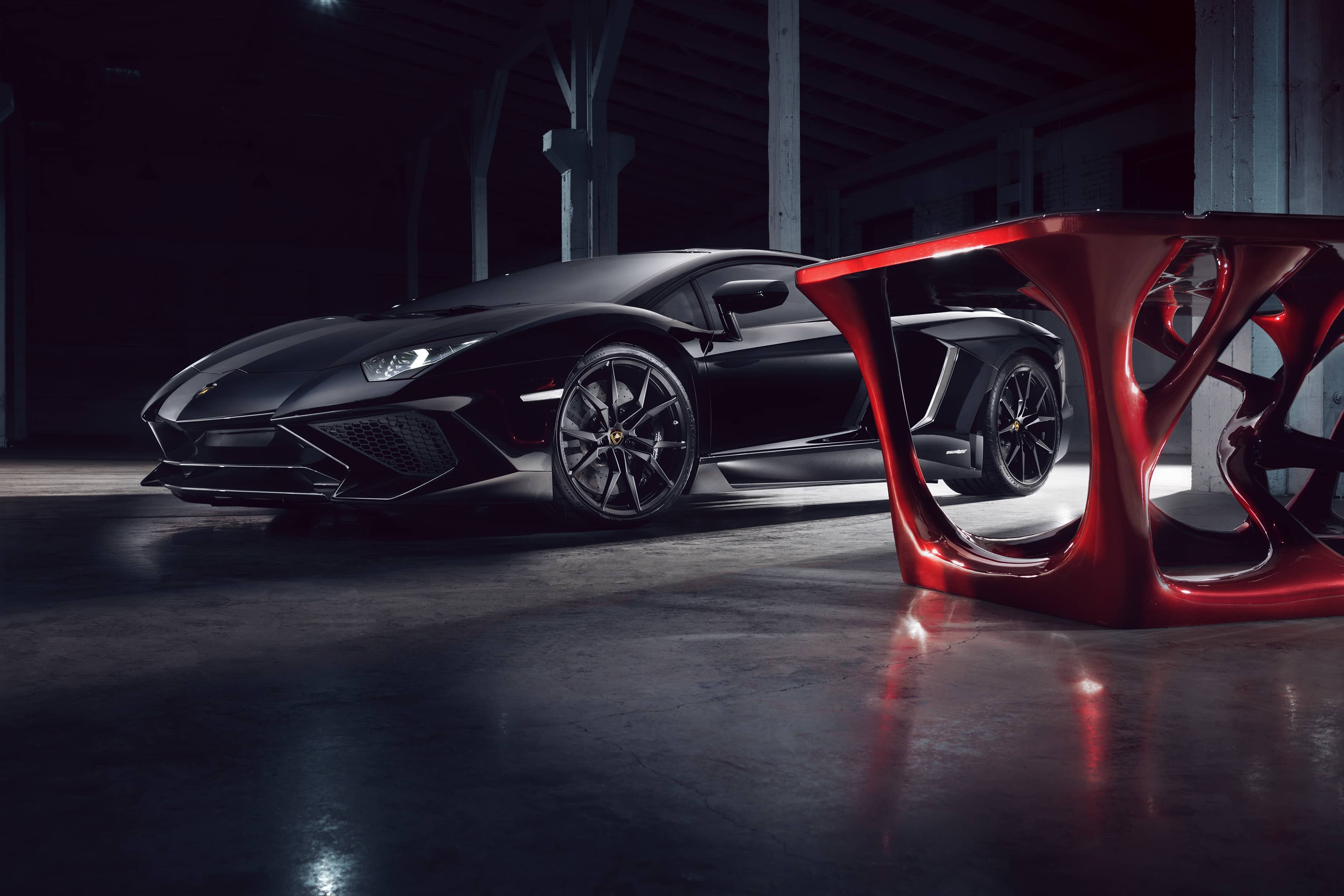
The Rex Axon table pictured next to the Lamborghini Aventador

It took Wolf six months to build the Rex Axon. First, it was printed on a large format machine and then finished by Patech, in charge of smoothing the surface, using resin to coat the part and applying varnish. In addition, after painting the table, it was covered with a ceramic coating in order to protect it from any scratches. Once finished was pictured alongside the Lamborghini Limited Edition Aventador at the company headquarters and the famous automobile museum in Bologna, Italy, showing the aerodynamic similarities between the table and the sports car.

The Rex Axon table pictured next to the Lamborghini Aventador

The name itself is a combination of the Latin words Rex, which means king, and Axon, which means neuron. In fact, the table features a top surface with a pattern that resembles a turtle shell, while the design of the base successfully mimics a neural network connection, which also has practical application, as less material has been used. compared to other more typical basic shapes, while retaining its strength. The forerunner of this style was Zaha Hadid, who designed the Mesa coffee table, one of Wolf’s inspirations to create the Rex Axon, but other famous designs include the Nagami chair collection, the Ocke series, and the Batoidea chair. by Peter Donders.

The basis of the table was inspired by neural network connections

Poland, Wolf is a big name in artistic and functional projects in comprehensive design, digitization and modeling services using industrial technologies. It has one of the largest machine parks in Europe, which enables printing in FDM, SLS and SLA technologies. The Rex Axon may not be ready for mass production just yet, but maybe in the next few years this luxury tabletop model and others could be delivered to your office or home in a matter of minutes. days only. Would you buy it?

Please enable JavaScript to view comments provided by Disqus.

Source link

Share.

Leave A Reply Cancel Reply

From Boardroom Surfer To Successful Entrepreneur Architect And Designer B Allison Brooks Now Sets Her Sights On Senior Housing

From boardroom surfer to successful entrepreneur – Architect and designer B. Allison Brooks now sets her sights on senior housing

0

Any female entrepreneur who starts a business, hires 13 people, and becomes a trusted interior designer for Crow Holdings and others clearly has no shortage of vision.

But B. Allison Brooks’ vision for B2 Architecture + Design was not shaped by a lifelong dream, but rather by a surge from the 2008 recession.

Courtesy of B2 Architecture + Design

B. Allison Brooks, founder of B2 Architecture + Design

The infamous 2008 recession derailed the aspiring developer’s plan to build two DFW properties, leading him to settle informally in a boardroom donated by real estate development firm Crow Holdings.

This side concert eventually grew into a fully-fledged, stand-alone interior design and architecture company in the heart of Dallas’ design district.

B. Allison Brooks sat with Bisnow to explain his unexpected journey from architect to boardroom surfer to successful business owner.

Reserved area

Courtesy of B2 Architecture + Design

B2 Architecture + Design employees enter the creative spirit

Bisnow: Describe how B2 Architecture + Design was born.

Brooks: Crow Holdings had been a client when I was at Good, Fulton & Farrell, and Crow Holdings had just bought the old Parkland Hospital and was redeveloping it into a corporate campus. They were trying to do things a little differently. They were all doing their own rental contracts in-house, so they asked me if I could just help on a contract basis with space plans for new customers and potential tenants. I helped them with their space plans, and when people signed a lease, they said, “OK, we’re going to continue working with you, aren’t we? And I thought, well, I’m a licensed architect; I’ve never really done interiors before, but surely I can. I’ve probably done 20 or 25 projects there with small tenants. I have never been an employee. I just started to introduce myself and sit at their conference room table three days a week. Then it was four days a week. Then they said, “You monopolize our conference room. So they gave me an office, a phone number and an email address. A lot of people thought I was an employee, but I never was.

Then Trammell Crow Residential started to take over, and they asked me if I could consult them for some interior work, so I started to do a bit. Then they gave me four projects and said, ‘You have to get out of here and you have to hire your own staff and find your own office space. ” I was terrified; I thought I had to be sitting at that conference room table everyday to find a job. Turns out it isn’t, but I was afraid it would be for a while.

Bisnow: What does running a business owned by women look like?

streams: I come from an architectural background, and I’m used to being the only woman in the room and I’ve kind of got used to it. Having this whole office filled with very talented women is a different vibe. (B2 has 13 employees – all women, including two architects, eight interior designers, four purchasing managers, installation specialists and an accountant.)

Bisnow: How is multi-family interior design different today compared to your early days in the business?

Brooks: When I was working in the architecture side in 2007, we were getting all permits without even knowing who the interior designer was and had no interior design or interior design drawings. We didn’t know who hired the interior designer, and it was usually someone hired by the owners at the time. They really came in and decorated a white box. [Interior designers] were not involved in determining the amenities, where they are in the building, and how to switch between the amenities. We are constantly coordinating from project start to finish with base building architect and structural engineer and civil engineer. We do a lot of coordination with the landscape architects to make sure there is a continuous flow between interior and exterior spaces.

You also had a rental office, and maybe a room with a few treadmills and a swimming pool [for amenities]. Now, we do a lot of research to verify demographics in a particular location to make sure we are achieving the amenities they want. In one property, we have a brushing bar. We have wine cellars, rooftop terraces, and spas with massage tables, so it’s increasingly inspired by boutique hotels. This whole idea of ​​”living” is important in many of these properties.

Reserved area

Courtesy of B2 Architecture + Design

B2 Architecture + Design has grown from a one-woman show to 13 employees working in the Dallas Design District.

Bisnow: Do you see a recovery in activity within the multifamily sector?

Brooks: Yes, but I don’t see how it will continue. I mean I bet it keeps going. But, at the rate at which things are going, it does not seem sustainable. We are not slowing down and we have not seen any signs of slowing down from our customers. I always hear that it’s harder to find sites and get diversified equity, but I don’t see a slowdown. What we did when we decided to go fully into multi-family is say we need to diversify by not just doing new builds and not just towers or mid heights. We are also doing garden-type operations… and are starting to do more renovations. My thinking is if multi-family is a bit of a downturn, there are a lot of properties that haven’t been touched for 20 years that are in prime locations that are adjacent to all of those luxury properties that need a refreshment, and therefore we have been very happy with the work that we have obtained in these markets.

Bisnow: Where do you plan to grow next?

Brooks: We are 95% multi-family. I have hired two women in the last six months – one with very good experience in student housing and another with very good experience in senior housing. I would really like to develop these two market sectors, and I think there are opportunities in both. They have their own players, their own equity, their own jargon, so I’ve been looking for the right people over the last three or four years for these market groups. I found them and now we’re really going to get on with this matter.

Bisnow: So what makes senior housing an attractive prospect?

Brooks: [Seniors] are demanding residents and active residents. A lot of the properties we’re working on from a direct multi-family perspective, they could already qualify as age-restricted residences if they wanted to. They are sort of by their price. So I think what really turns me on is this trend towards seniors living on college campuses. I think the mix of seniors and students, and obviously the very strong health systems that surround universities – as well as access to the arts, entertainment, and adjunct faculty – all of these things cause these generations to blend together. .

Bisnow: Do you see a lot of senior residences popping up around DFW that could serve as future interior architecture or design projects?

Brooks: Yes. Obviously there is the [Ventana by Buckner] it happens on Northwest Highway and Central. It is a magnificent building designed by D2 Architecture. I think we’re going to focus more on for-profit independent living and memory-care properties, but if we had a great non-profit group we wouldn’t turn it down. I think, however, in the same way as with multi-family home improvement projects, we think there is a very strong market for senior property renovations, and we are talking with many groups about doing that.

Source link

Share.

Leave A Reply Cancel Reply

This Desk Theory On The Dunder Mifflin Conference Room Will Blow Your Mind

This “desk” theory on the Dunder Mifflin conference room will blow your mind

0

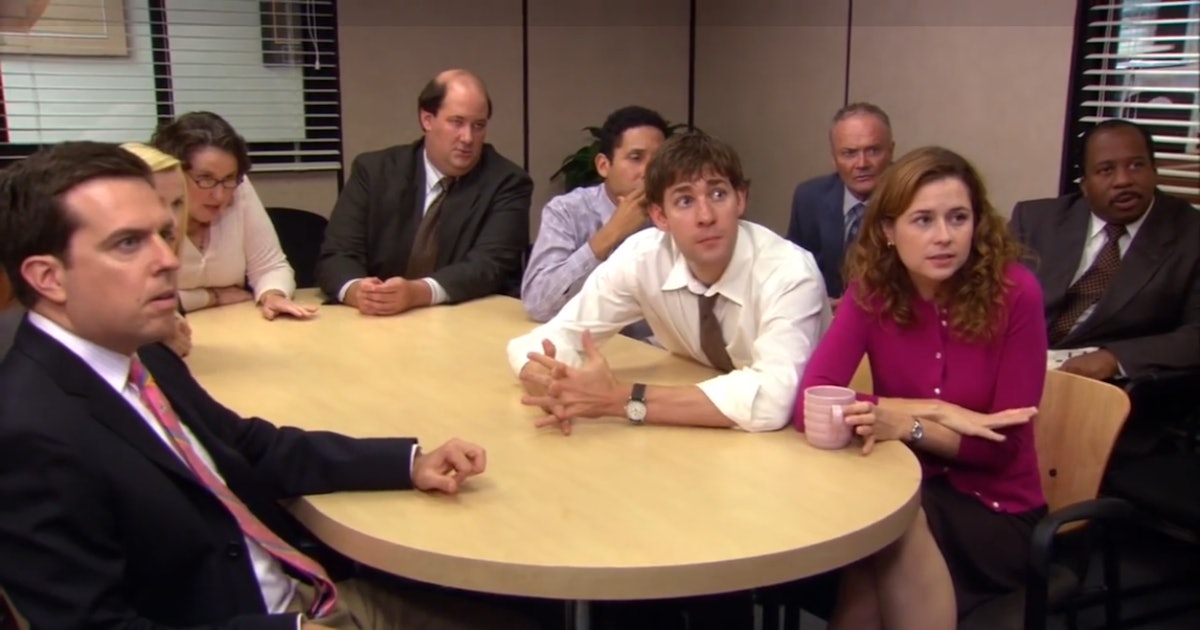
Was there anything suspicious in Scranton? Irregularities with the Dunder Mifflin conference room on Office have long raised the eyebrows of some eagle-eyed fans. Although the NBC comedy hasn’t aired since 2013, one Reddit user made the astute remark two years after the finale that “the conference room is constantly being changed from full chairs to a huge desk in the middle.” With the beloved Emmy-winning mock documentary now available to stream and in high rotation for replay on cable, BuzzFeed writer Stephen LaConte reopened the case in a Tuesday, October 2 post. What’s this he noted.

“I saw each episode about 1,000 times, but it wasn’t until the other day that I realized there was something very …unusual about the Dunder Mifflin boardroom, ”LaConte wrote. “And so, my friends, the question is, how on earth is this gigantic, heavy table being moved in and out of the room so frequently?”

He made a valid point. Of course, the frequently changing furniture and accessories were probably easily overlooked as fans caught their breath between laughs at the hilarious punchlines and broken fourth wall stares into the camera. After careful investigation, LaConte ruled out some possible theories, observing that the “solid wood” table “does not break or fold up in the middle” and that there is “no wheel to be found”. He also stressed that it “would be a PROCESS” to move the table in and out of the small door of the conference room.

While the seemingly impossible logistics of changing the room’s setup may remain a mystery, the question appears to be a sufficient excuse to examine some evidence. Or, you know, just revisit some classic boardroom scenes from Office.

In the Season 6 episode titled “Koi Pond,” Steve Carell’s Michael Scott facilitates an awareness exercise for the staff. In this particular scene, some of the characters – including Jim (John Krasinski), Angela (Angela Kinsey), and Erin (Ellie Kemper) – are seated around the table, while others are seated in chairs lining the perimeter of the room. . Of course, hilarity ensues when Carell’s, well, callous manager brings up topics ranging from her falling into a koi pond to Meredith (Kate Flannery) having slept with a terrorist.

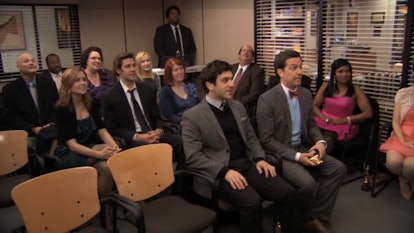
The boardroom table was conspicuously absent in Season 7’s “Michael’s Last Dundies” in which Dunder Mifflin employees – seated in rows of chairs – pay homage to Michael’s 9,986,000 minutes working for the company in singing a parody of Rent’s “Seasons of Love”. . ”

Throughout the show’s nine seasons, how did the Dunder Mifflin party planning committee manage – or at least attempt to execute – the many office festivities? In the compilation video below, Angela, Pam (Jenna Fischer), Phyllis (Phyllis Smith) and Co, can be seen holding their meetings around the elusive boardroom table.

When Carell hilariously portrayed his previously incarcerated, bandana-wearing “Prison Mike” fictional character in Season 3’s “The Convict”, the boardroom was set up in chair style only. The seated staff members really tried to keep their cool as ‘tough’ Michael told false stories about his time behind bars – including the apparent existence of prison dementors at the Harry potter.

Conference table present or not, it cannot be discussed Office kept fans in stitches regardless.

Source link

Share.

Leave A Reply Cancel Reply

Entrepreneur Angus Brings Years Of Industry Experience To The Conference Table

Entrepreneur Angus brings years of industry experience to the conference table

0

Entrepreneur Angus brings years of industry experience to the conference table

Calendar An icon of a desk calendar.

to cancel An icon depicting a circle with a diagonal line across.

Caret A block arrow icon pointing right.

E-mail An icon of a paper envelope.

Facebook A Facebook “f” brand icon.

Google An icon of the Google “G” brand.

Linked to An icon of the Linked In “in” brand.

Sign out An icon representing disconnection.

Profile An icon that resembles the human head and shoulders.

Telephone An icon of a traditional telephone receiver.

Check A check mark icon.

is public An icon of a human eye and eyelashes.

is not public An icon depicting a human eye and eyelashes crossed by a diagonal line.

Case An icon of a paper folder.

Case An icon of a paper folder.

Breaking An icon of an exclamation mark on a circular background.

Camera An icon of a digital camera.

Caret An icon of a caret arrow.

The clock An icon of a clock face.

close An icon in the shape of an X.

Close icon An icon used to represent where to interact to collapse or close a component

Ellipse A horizontal 3 dots icon.

Envelope An icon of a paper envelope.

Facebook An icon of a facebook logo f.

Camera An icon of a digital camera.

Home An icon of a house.

Instagram An Instagram logo icon.

Linked to A Linked In logo icon.

Magnifying glass An icon of a magnifying glass.

Search icon A magnifying glass icon that is used to represent the search function.

Next An arrow icon pointing to the right.

Opinion An explanatory mark centered within a circle.

Previous An arrow icon pointing left.

Evaluation A star icon.

Label An icon of a tag.

Twitter A Twitter logo icon.

Video camera An icon of a video camera shape.

WhatsApp A WhatsApp logo icon.

Source link

Share.

Leave A Reply Cancel Reply

Handcrafted Conference Table For Tchs Students

Handcrafted conference table for TCHS students

0

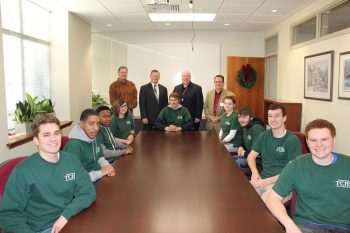
On Thursday, December 8, 2016, AM students from the Coatesville Area School District and Bishop Shanahan High School from the TCHS Brandywine Carpentry Program helped set up the new leadership conference table at CCIU. The students were among the first to sit at the management conference table as their instructor, the principal, the director of career, technical and personalized education services and the general manager of CCIU admire their work. . (left to right) Dario Raysor (Bishop Shanahan), Tariq Scott (Coatesville), John Miller (Coatesville), Nathan Mowday (Coatesville), Scott Eddy (instructor), Frank McKnight (director of TCHS Brandywine), Austin Seth (Coatesville) ), Dr Joseph O’Brien (Executive Director of CCIU), Dr Kirk Williard (Director of Career, Technical and Personalized Education Services at CCIU), Renay Contrino (Coatesville), Eric Sandoe (Coatesville), Joe Kopec (Bishop Shanahan) and Michael Stanley (Coatesville).

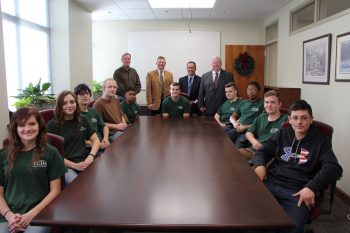
DOWNINGTOWN – Seventeen carpentry students from the Brandywine campus of Technical College High School (TCHS) became the first to sit at the all-new 12-foot maple wood executive boardroom table they built for Chester County Intermediate Unit (CCIU). After spending hundreds of hours working on the custom table, estimated to be between $ 8,000 and $ 10,000 in retail value, these students set up the new table, which will be used by CCIU Executive Director Dr. Joseph O ‘Brien, to meet superintendents, business leaders and key partners.

The students who participated in the project come from the school districts of the Coatesville area, the Downingtown area and the West Chester area and Bishop Shanahan High School. O’Brien contacted the carpentry students at TCHS Brandywine when it became apparent that the existing conference table was not doing the job.

“In September, it became clear that we really needed a new conference table,” said O’Brien. “So rather than ordering one, I thought it would be a wonderful idea to involve our TCHS students. They did not disappoint. From start to finish they did an amazing job and delivered a top notch product. I had every confidence they would, ”added O’Brien.

The other students who worked on the new conference table: (left to right) Jordan Sigel (Downingtown East), Miriam Sadler (Downingtown East), Dale Gross (West Chester Henderson), Connor Ford (Downingtown East), Alberto Sosa (Downingtown West), Scott Eddy (instructor), Frank McKnight (Director of TCHS Brandywine), Eric Steward (Downingtown West), Dr Kirk Williard (Career Director, Technical and Personal Education Services at CCIU), Dr Joseph O ‘ Brien (CCIU Executive Director), Kyle Ryan (West Chester East), John Gaffney (West Chester East), DJ Hughes (West Chester East) and Corey McCue (West Chester East).

According to carpentry instructor Scott Eddy, producing a well-rounded student is the mantra by which he runs his program. “All of my students are extremely competent. I really believe it. If I didn’t, I wouldn’t be a teacher, ”Eddy said.

“I tell my students that I don’t want them to settle down with a job one day. I want them to be estimators, managers and business owners. This is why we really stress the importance of higher education beyond TCHS. Of the 37 students in my program, I have at least 20 who are currently taking a college 1: 1 articulation course for college credits that I currently teach. People don’t always think carpentry students go to college, but it’s something we highlight and really support here. It’s something unique about TCHS, ”said Eddy.

The emphasis on college is something that really resonated with Eddy’s students. Senior carpentry students Tariq Scott and John Miller, both from the Coatesville-area school district, emphasized the importance of working on high-level projects like the executive boardroom table when applying to college. . “I think it’s important that we can demonstrate that not only do we have the technical woodworking experience, but that we’ve used it to create something of high quality,” Scott said.

Joe Kopec of Bishop Shanahan High School was so committed to the project that he showed up for the installation, even when his home school had a day off. “I arrived today even though I didn’t have to introduce myself. Maybe Mr. Eddy had something to do with it, but I wanted to go through with it. The same goes for my fellow student Bishop Shanahan Dario Raysor. He couldn’t be here today, but he texted us about it to see what all the updates are, ”Kopec said.

“This project really taught us a lot about teamwork and communication. Two different class sections spent hundreds of hours creating this board. We are all proud of what we have accomplished, ”said Kopec.

For student Miriam Sadler, an elder at Downingtown East High School, this project has helped her get a better idea of ​​what she wants to do with her woodworking experience. “When I started at TCHS, I really didn’t know what I wanted to do. I knew I was artistic and thought carpentry would be a good outlet for it. Also, as a woman, I felt like it would be really stimulating to learn a trade like carpentry in order to have the skills to be self-sufficient and, who knows, maybe build a house for myself. day, ”Sadler said.

“It was perhaps the most artistic project I have ever done and it really confirms that I want to specialize in more artisanal types of carpentry when I go to college next year,” said Sadler.

Connor Ford, a senior from Downingtown East, saw this project as an opportunity to benefit from Eddy’s extensive experience. “The explanations and tips Mr. Eddy taught us really made this project special and insightful to me. I was previously accepted to Pennsylvania College of Technology and am currently taking advantage of the dual enrollment program for college credits while attending TCHS, ”said Ford.

“In fact, I am the first person in my family to pursue a blue collar career. So having projects like this that I can show my family is really important. I love working with my hands and I’m excited to bring all the things I learned to college and then to a career, ”said Ford.

The AM Section of Carpentry, which includes students from the Coatesville area school district and Bishop Shanahan High School, took down the previous conference table and set up the frame for the new table on Thursday, December 8. PM students, who are from the Downingtown area and West Chester area school districts installed the new table top and took away the previous table top to refurbish it.

“I am so proud of what my students have done here. They took a project from an initial meeting with the client, Dr. O’Brien, through to the design, build and installation process. And, they did it all with minimal direction from me. They used machines they had never used before to do the custom molding and they were able to use the equipment from the Automotive Collision program to stain the table. When the students signed the bottom of the board, put it in the room and received recognition from the administration of TCHS Brandywine and CCIU, it made me so proud as a teacher, ”said Eddy .

You can find more information about the TCHS Brandywine carpentry program at http://www.cciu.org/Domain/374.

Source link

Share.

Leave A Reply Cancel Reply

Need A Conference Room Quickly This Startup Has A Fix

Need a conference room, quickly? This startup has a fix.

0

BIZLY, the smartphone app

Source: Bizly

Now there’s an app to book private hotel rooms by the hour and help you close the deal – but no, it’s not what you think.

Professionals in New York, San Francisco and Chicago have faster and easier access to luxury business meeting locations for their next offsite, thanks to Bizly, a startup launched in those cities on Thursday.

The mobile app allows professionals to book hotel meeting spaces up to a month in advance when their offices don’t have enough space or they just need a change of scenery. Bizly takes the sharing economy, in-market booking ideas behind WeWork and Hotel Tonight and extends them for short-term event planning at venues like W Hotels, Mandarin Oriental and Omni Berkshire.

Founder and CEO Ron Shah said many companies are shrinking their workspaces as more employees work outside of the office. Hotels have become the perfect spaces to provide these businesses with a “mobile workspace” because they have the amenities, service and quality that large corporations are looking for, Shah said.

“Bizly is the only platform in the world that does hotel reservations and meetings,” Shah said. “There are other platforms where you can book someone else’s spare conference room in their office or someone else’s spare office, but what we found was that companies couldn’t rely on quality and they didn’t know what they were going to get.”

To reserve a meeting room at a hotel, a person must call, negotiate a rate for the space, and sign a contract. This process can take three to four days, but Bizly’s goal is to make the process much easier. With just a few taps in the Bizly mobile app, you can book your meeting room and have it ready for use.

Bizly focuses on meetings at hotels for up to 40 people with rates starting at $50 per hour. The company has partnerships with 25 hotels in New York, 10 hotels in Chicago and 11 hotels in San Francisco.

The company has also engaged partners to provide video conferencing and other technology in the meeting room, Shah said.

Shah said the company is working on rewards programs that users and hotels can benefit from.

“In the fall, we plan to have two types of rewards plans. One is a Bizly rewards program that would give guests freebies, whether it’s using the spa, other amenities from the hotel or free meeting space,” Shah said. “We’re also going to set up a program with some of the big hotel groups around their existing loyalty programs, so there will be loyalty integration in a few months.”

Bizly is also working on making programs for private dining rooms and restaurants as hangouts. The company has already signed up with some catering companies in New York to provide similar services for private dinner parties, Shah said.

Shah said he came up with the idea for Bizly while he was in his investment office in New York – the building had been under construction for six months.

“I thought I could use the hotels near my office. There were about 10 big hotels and I tried to use them for meetings,” Shah said. “It was a very painful process, and I realized then that the technology had to be there to solve this problem.”

Source link

Share.

Comments are closed.